

A shared home office can change the game for two people working from home. With more people freelancing or working remotely, finding a good home office setup is key. It saves space and helps both people work better together.
Designing an ergonomic workspace is important. It makes sure both people are comfortable and can focus. Knowing what you need and how you work is the first step to a great shared office in a rental.
Understanding the Importance of a Shared Home Office
Having a shared home office is key for better work and personal life. It helps people work together well and improves their relationship. A good shared office space makes it easy to share ideas and work together.
Sharing a workspace also saves money. You don’t have to pay for two separate offices. This lets you use your money for other important things. It also helps you work better and enjoy your personal time more.
A well-planned shared office has many benefits. It makes it easy to talk and share ideas. Different areas for different tasks help everyone work without distractions. A shared office makes work better and strengthens relationships.
Benefits of a Shared Home Office
Having a shared home office brings many benefits. It helps you grow both personally and professionally. Sharing space can save money and improve teamwork, making work more efficient.
Cost Savings on Office Space
One big advantage is the cost savings. When two people share an office, they spend less on rent and utilities. They also save on things like printers and internet.
These savings can help you manage your budget better. You can use the extra money for things that really matter to your work.
Enhanced Collaboration and Productivity
Working together in the same space boosts teamwork. It makes talking and solving problems easier. This leads to more motivation and better work.
Being together helps you support each other. You can share ideas and find solutions faster. It’s a great way to work together.
Challenges of a Shared Home Office
Choosing a shared home office comes with its own set of challenges. It’s key to understand these issues to make a productive space. The main concerns are managing space and resources well and dealing with distractions.
Managing Space and Resources
In a shared office, different needs can make organizing tough. Personal preferences for layout and resource access can conflict. For example, one might want a clean desk, while another needs specific tools everywhere.
These challenges mean you need clear rules for using shared resources. This helps keep the workspace peaceful and productive for everyone.
Potential Distractions
Distractions can be a big problem when two people share an office. You might get less focused because of what the other person is doing. That’s why managing distractions is so important.
Knowing each other’s work patterns can help create a balanced space. Setting quiet times or using headphones can reduce interruptions. This lets both people concentrate on their work without being disturbed.
Setting Up a Rental-Friendly Home Office
Creating a shared home office needs careful thought about furniture and space. The right furniture makes work enjoyable and efficient. Choosing versatile pieces and setting up different zones boosts productivity.
Choosing the Right Furniture
Focus on ergonomic and versatile furniture for both users. Adjustable standing desks are great for changing positions. They keep the workspace healthy and comfortable.
Also, get comfortable chairs with good support. They help avoid fatigue during long work hours.
Creating Zones for Each User
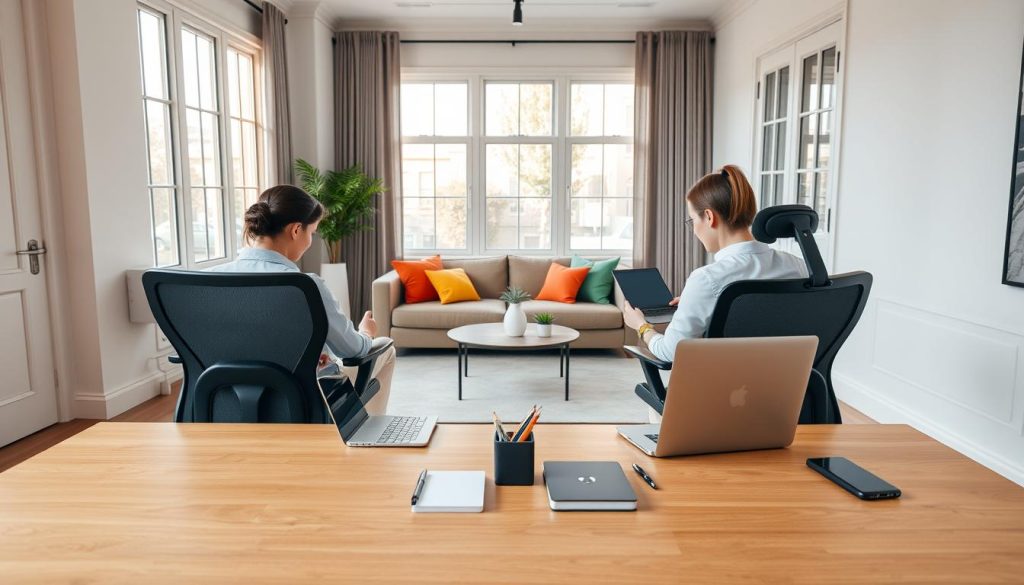
Divide the workspace into zones for each person. This keeps areas personal and reduces distractions. Use dividers or bookshelves to set boundaries without feeling closed in.
Plan the layout based on each person’s work style. This creates a space that works well for everyone, improving productivity.
Tips for Harmonious Co-Working
Creating a productive atmosphere in a shared home office is key. Good communication in shared workspaces is vital. Here are some tips to help both individuals thrive in this shared environment.
Establishing Clear Communication
Start by setting clear rules about work hours, personal space, and communication. Regular check-ins help share updates and address concerns. A chat app or note board can improve clarity and reduce misunderstandings.
Scheduling Work Hours
A clear schedule helps avoid disruptions. Set times for working together and alone. This way, both can respect each other’s work style without interruptions. A well-planned schedule makes the most of shared space and resources.
| Time Block | Activity | Notes |
|---|---|---|
| 9 AM – 11 AM | Collaborative Work | Brainstorming sessions, meetings |
| 11 AM – 1 PM | Focused Work | Individual tasks, minimal interruptions |
| 1 PM – 2 PM | Lunch Break | Separate time for relaxation |
| 2 PM – 4 PM | Collaborative Work | Finalizing projects together |
| 4 PM – 5 PM | Wrap Up | Review the day’s progress and plan for tomorrow |
Creative Shared Home Office Ideas
Turning your shared home office into a productive and nice-looking space is possible. Use creative ideas for dual workstations and vertical space. This way, you can meet both users’ needs and make the most of the space.
Dual Workstations
Having two workstations can give each person their own area in the office. Pick desks that match in style but have different storage. This helps keep things organized and tidy.
Look for desks that can change height. This lets both users work comfortably. It makes the office a better place to be.
Efficient Use of Vertical Space
Using vertical space can really help in a small office. Put shelves above the desks for important items. This saves floor space.
Wall-mounted organizers are great for keeping things like documents and supplies handy. Add plants or artwork to make the space welcoming. This way, you can make a shared office feel like a team effort.
Conclusion
A successful shared home office is a great mix of work and saving money for two people in a rental. Working together boosts efficiency and builds friendship. With smart home office ideas, you can grow both personally and professionally.
Managing space and distractions can be tough, but planning and talking openly helps. Setting up specific areas and clear rules can reduce fights and increase work. This way, you can work better together.
Adopting a shared workspace can make your office experience better. With the right strategy, you can have a space that sparks creativity and teamwork. This ensures you both meet your goals in a supportive environment.
FAQ
What are the advantages of a shared home office compared to separate workspaces?
A shared home office saves money by avoiding the cost of renting separate offices. It also boosts teamwork and productivity. Users can help and motivate each other in a good work environment.
How can I minimize distractions in a shared home office?
To cut down on distractions, set clear rules about work hours and personal space. Plan times for working together and times for focusing alone. This way, everyone can do their best without getting in the way.
What furniture should I consider for a shared home office?
Choose furniture that is both comfortable and useful for both people, like adjustable standing desks. This makes sure everyone is comfortable and the space is used well.
How can I effectively utilize a small shared workspace?
Use vertical storage like shelves to save space and stay organized. Having two workstations lets you and your coworker have your own space without taking up too much room.
What ground rules should we establish in a shared home office?
Make rules for talking, organizing your desk, and work hours. This keeps the space peaceful and lets both people work well.
Are there any specific design tips for a shared home office?
Make separate areas for each person to feel like they own it. Add personal touches that show off both styles. This makes the space look good and work well.
