

Setting up a home office in a rental can be tough, mainly because of separating work areas. With more people working from home, the demand for good home office solutions has grown. Lightweight dividers are a great way to create work and relaxation zones without damaging your rental.
This article will show you the many options for lightweight dividers. We’ll talk about their benefits and how to use them to make a balanced workspace.
Understanding the Need for Space Division in a Rental
Creating a functional home office is more than just a desk and chair. In a rental, setting up separate areas for work and play boosts productivity. A clear workspace helps you focus and keeps distractions away.
By dividing your home office, you make a space that supports work and personal life. This setup is key for a better work-life balance, even in small rental spaces.
Why Separate Workspaces Matter
Having separate workspaces improves your efficiency and helps you switch between work and personal life. It sets boundaries that keep your home organized and clutter-free. This way, you can focus on work tasks and relax after hours.
This separation is critical for a healthy work-life balance, even in small spaces. It helps you stay productive and maintain a clear mind.
Considerations for Rental Spaces
When dividing your home office in rentals, remember your lease agreement. You can’t make permanent changes, so go for temporary solutions. Think about your rental’s size, layout, lighting, and noise levels.
Also, choose dividers that match your decor. This ensures your rental looks good and feels welcoming.
| Consideration | Description |
|---|---|
| Lease Restrictions | Most renters cannot make permanent changes, so choose temporary solutions. |
| Space Layout | Analyze your rental’s layout to determine where dividers will be most effective. |
| Lighting | Ensure your workspace receives adequate natural light to enhance productivity. |
| Noise Levels | Select materials that help reduce noise, promoting a more focused work environment. |
| Aesthetic Cohesion | Choose dividers that align with your overall decor style for a polished look. |
Choosing the Right Lightweight Dividers for Your Home Office
Setting up a workspace in a rental can be tough. But, picking the right lightweight dividers can really help. There are many options to choose from, letting you make your space your own.
Types of Dividers to Consider
There are many types of lightweight dividers for room division. Freestanding panels are great for adding style and flexibility. They’re easy to move around.
Modular wall kits are also popular. They let you create different spaces easily and change them as needed. Portable office dividers, made from materials like fabric or cardboard, come in many designs. They add beauty and function to your home office.
Portable vs. Permanent Solutions
It’s important to think about the pros and cons of portable vs permanent dividers. Portable dividers are great for changing your space quickly. They’re perfect for rentals where you might need to move things around.
On the other hand, permanent dividers might be more stable but could break rules or need big changes. Knowing the difference between portable and permanent dividers helps keep your space both useful and legal.
Benefits of Using Modular Wall Kits for Your Rental-Friendly Home Office
Setting up a workspace in a rental can be tough. Modular wall kits offer smart ways to change your space without making permanent changes. They make your office area flexible and space-efficient, growing with your needs.
Flexibility and Adaptability
Modular wall kits are made for changing, letting you design an office that fits you. You can move or change them easily. This means your office can grow with you, no matter where you live.
Easy Installation without Professional Help
Installing modular wall kits is simple, so you don’t need a pro. They usually come with easy-to-follow instructions and just basic tools. This makes it easy to set up your space, creating privacy and order without hassle or cost.
Creative Ways to Use Room Dividers Effectively
Room dividers offer many benefits for a productive home office. They can greatly improve your workspace with smart placement and design. This meets your needs for both visual and acoustic separation. Here are some effective ways to use these dividers to enhance your office experience.
Creating Visual Privacy
Visual privacy is key for staying focused at work. By placing room dividers wisely, you can separate your workspace from the rest of your home. This reduces distractions and helps you stay productive.
Choosing dividers with attractive fabrics or screens can also make your office look more professional. This is great for video calls or virtual meetings.
Enhancing Acoustics and Reducing Noise
Acoustic dividers are great for improving sound quality and cutting down on noise. They often use sound-absorbing materials to block out background noise. Using these dividers can make your home office a quieter, more peaceful place to work.
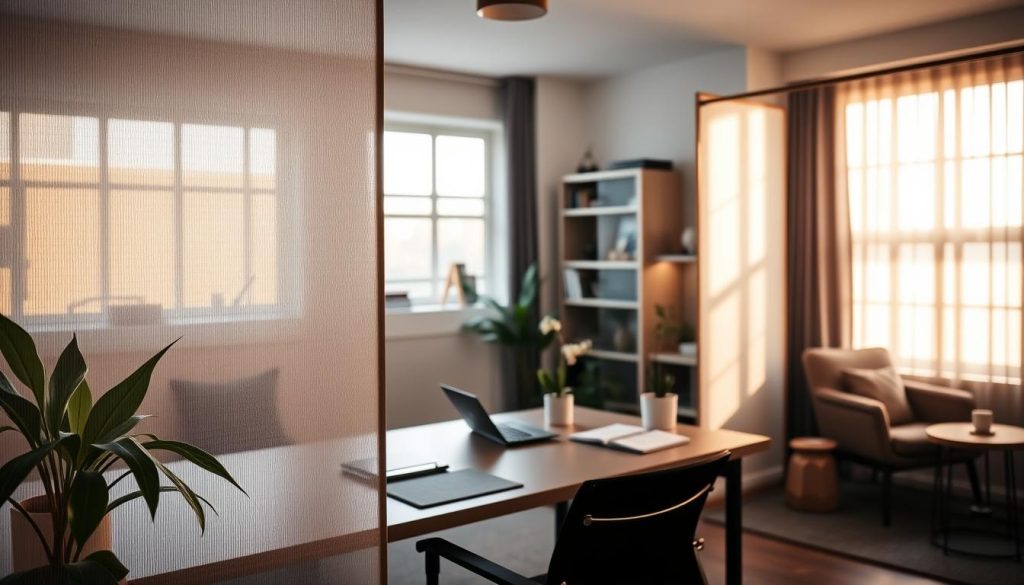
| Type of Divider | Material | Visual Privacy | Noisy Environments |
|---|---|---|---|
| Fabric Screens | Polyester, Cotton | High | Moderate |
| Wooden Dividers | Solid Wood, Plywood | Moderate | High |
| Acoustic Panels | Foam, Fabric | Low | Very High |
| Folding Screens | Wood, Fabric | High | Moderate |
DIY Lightweight Dividers for Your Home Office in a Rental
Making your own lightweight dividers is a fun project for your home office. You can use the right materials and a bit of creativity to make dividers that fit your space perfectly. This section will tell you what materials you need and guide you through each step.
Materials Needed for Your Project
To start, collect these supplies:
- XPS foam board for insulation
- Wooden frames made from 1x4s and 2x4s
- Screws for assembly
- Fabric or felt for covering
- Paint for aesthetic appeal
Having the right tools, like saws and drills, makes the project easier. It also helps you make dividers that won’t break the bank.
Steps to Build Your Own Dividers
Begin your DIY project with these steps:
- Measure the space you want to divide and decide on panel sizes.
- Cut the insulation foam to fit.
- Cut the wooden frames from your 1x4s and 2x4s.
- Assemble the frames with screws.
- Make them look good by painting and adding fabric covers.
- Put the foam inside the frames and add bracing if needed.
- Place your dividers in your workspace to make sure they fit right.
Conclusion
Creating a productive home office with lightweight dividers can really boost your workspace. Understanding the need for space division helps you find solutions that fit your style and work habits. These dividers make your space look good and help you stay organized.
You can pick from professional-grade wall kits or try DIY options. The choices are endless. These dividers help you set up your space just right, making your work area more productive. With the right planning and materials, you can turn your rental into a place of creativity and efficiency.
When improving your office space, think about how each part affects your work. A well-organized space helps you focus better and boosts your daily productivity. This makes your home office a place of inspiration and success.
FAQ
How can I create a separate workspace in my rental without making permanent changes?
Use lightweight dividers like room screens or folding panels. These options don’t harm walls or floors. They’re perfect for rentals.
What are some versatile options for lightweight dividers?
Consider fabric room dividers, bookcases, or curtains. Portable solutions like folding screens or decorative panels also work well.
Are DIY lightweight dividers a good choice for renters?
Yes! DIY dividers save money and let you personalize your space. You can make them from wood, fabric, or repurpose furniture.
How can I ensure my home office remains functional with a divider?
Pick dividers that let in light and absorb sound. This keeps your work area comfortable and productive.
What should I consider when choosing a divider for my home office?
Think about the divider’s style, height, and material. Make sure it matches your decor. Also, consider how often you’ll need to move it.
Can lightweight dividers help with noise reduction in my home office?
Yes! Many dividers improve acoustics. Look for ones with fabric or thicker materials to absorb sound and quiet your space.
