

In today’s world, messy cables, chargers, and electronics can be more than just a nuisance. They can slow you down and even be dangerous. It’s key to find good ways to organize them to keep your space tidy and safe.
Whether at home or work, having a clean area is important. By learning how to organize your cables and electronics, you can make your space better. Let’s look at how to manage your tech clutter and make your area more functional.
Start With Your Box of Random Cables
Begin by tackling that box of random cables that seems to grow. It’s a cluttered space perfect for decluttering. Start by getting rid of cables you don’t use anymore. If you can’t remember what a cable is for, it’s probably not needed.
Identify Unused Cables
Go through your cables and sort them out. Getting rid of the unnecessary will clear up space. A simple rule is to get rid of anything you haven’t used in a year.
Sort and Label Your Cables
Now, sort your cables into groups like USB, HDMI, or power cords. Use cable ties or rubber bands to keep them tidy. Label each one so you know what it is. Store them in small boxes or Ziploc bags to keep them organized.
Use Creative Storage Solutions
For a creative twist, use items you already have at home. Old takeout containers or drawer organizers are great for storing cables. They make your space look better and keep your cables easy to find.
Effective Cable Management Techniques
Once you’ve cleared the clutter, it’s time to manage your cables better. A tidy workspace boosts your efficiency and makes your area more enjoyable. Use various tools to keep your desk organized.
Implement Cable Organizers
Cable organizers come in many types, so you can pick what works best for you. Silicone cable holders are flexible and strong, holding many cords in one spot. Cable sleeves, on the other hand, keep wires neat and prevent tangles.
Hidden Cable Management Solutions
For a neat look, you need hidden cable solutions. Under-desk trays are great for hiding extra cables. Clips that stick to furniture keep cords hidden, making your space look clean. These methods keep cables out of sight but easy to find when needed.
Utilizing Desk Accessories for Tidy Spaces
Desk accessories are key to keeping your space tidy. Cable clips and cord wraps help a lot in organizing your desk. Use trays for small items and have a special spot for chargers. This makes everything look good and helps you work better.
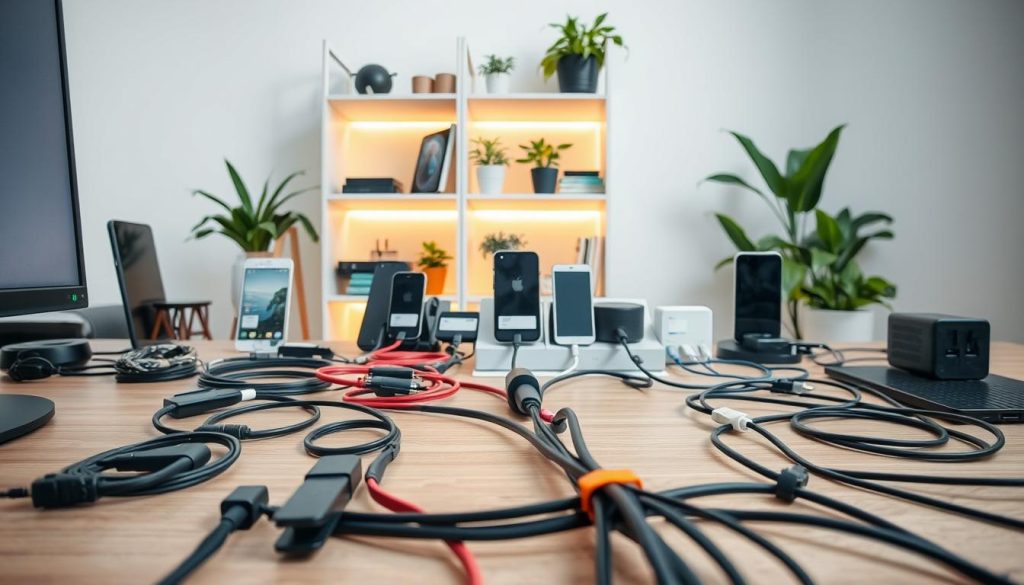
Organization & Storage Ideas for Electronics
First, tackle your cables. Then, focus on your electronics. Good organization & storage ideas can make a big difference. Start by grouping similar gadgets and accessories together. This makes it easier to find what you need without clutter.
Grouping Gadgets and Accessories
Organize your devices into groups like audio equipment, chargers, and portable gadgets. This makes storage easier and faster. Use small bins or drawer dividers to keep things neat and organized.
Storing Manuals and Original Boxes
Keeping original boxes and manuals is important for electronic gadget storage. It helps you find your devices and keeps their value. Set aside a drawer or box for these items, keeping everything in one place.
Digital Documentation for Easy Access
If space is tight, try digital documentation. Take photos of boxes and contents to save space. Store these images on your computer or in the cloud for easy access to your gadgets’ details.
Decluttering Old and Unused Gadgets
The final step in your electronic decluttering journey is dealing with old gadgets. Start by checking which devices are no longer needed or are just taking up space. It’s key to know which items need to be removed.
Identify Gadgets to Purge
Take stock of your electronics. Look at each gadget and ask yourself a few questions:
- When was the last time I used this device?
- Does it work well?
- Could I use it again?
Answering these questions helps you figure out which gadgets to get rid of.
Selling or Donating Old Electronics
If some gadgets are working, think about selling or donating them. Sites like eBay, Craigslist, or Facebook Marketplace are great for selling. Or, you could donate to local charities or schools. This way, you help others and keep devices from ending up in landfills.
Responsible Disposal of Old Devices
For gadgets that don’t work anymore, it’s important to dispose of them right. Look up local e-waste recycling programs. Many places offer these services to handle electronic waste safely. This helps protect the environment and keeps our planet clean.
Conclusion
Organizing your cables, chargers, and electronics doesn’t have to be hard. By using the tips we’ve shared, you can make your workspace tidy and boost your productivity. Sorting through your cables and devices makes your space easier to handle.
Using creative storage and cable management can help you take back your space. It’s a smart move for your well-being. A clean space reduces stress and helps you focus better.
Start organizing your cables and electronics today. A bit of effort can make a big difference. Turn your messy area into a smooth and useful space. Enjoy the calm that comes with it!
FAQ
What should I do with unused cables?
First, check if you know what the cables are for. If you haven’t used them in a while, you might not need them. You can donate or recycle them.
How can I organize my cables effectively?
Sort your cables into groups. Use cable ties or rubber bands to keep them tidy. Label them so you can find them easily. Old takeout containers can be great for storing cables.
What are some good cable management techniques?
Use cable organizers and hidden trays under your desk. Desk accessories that keep things tidy are also helpful. These methods keep your cables in order.
How should I organize my electronics?
Put similar gadgets together. Store their original boxes and manuals with them. This makes it easier to find things and can increase their value if you sell them.
Is it necessary to keep original boxes for my electronics?
Yes, keeping original boxes and manuals helps you find items later. It also makes them more valuable if you decide to sell them.
What should I do with old gadgets I no longer use?
Find out which gadgets you don’t use anymore. You can sell or donate the ones that work. For broken items, use local e-waste recycling programs.
How can I document my electronics without keeping physical boxes?
Take photos of the boxes and what’s inside. This way, you have the info you need without the clutter.
