

Decorating small spaces, like studio apartments and tiny condos, can be tricky. It’s important to pick the right furniture size, layout, colors, and lighting. These choices help turn a cluttered small room into a stylish, useful space.
Experts like Kevin Kaminski and Gabrielle Santiago say it’s key to use every inch wisely. Making smart choices can make your home look great and work well, even in small areas. In this article, we’ll explore common decorating errors and share tips to make your small home welcoming.
Understanding the Importance of Scale in Small Space Design
When designing small rooms, understanding scale is key. The size and arrangement of furniture affect comfort and function. A good layout balances these aspects, making the room feel open and welcoming.
The Role of Furniture Size and Layout
Furniture choice greatly impacts a small room’s feel. Choosing the right size furniture improves both looks and use. Always measure furniture before buying to fit it well in your space.
This ensures furniture doesn’t block paths or doors. It helps in keeping the room’s flow smooth.
Circulation and Movement in Small Rooms
Good circulation makes small spaces more useful. Leave 18 inches between furniture for easy movement. For walkways, aim for three feet to keep the flow smooth.
Common Small Space Decorating Mistakes
Small spaces have their own set of challenges. It’s easy to make decorating mistakes that affect both function and look. These mistakes include overcrowding, choosing the wrong size furniture, and not editing belongings. Knowing these mistakes can help you create a welcoming and organized space.
Overcrowding with Oversized Furniture
One big mistake in small spaces is using too big furniture. Large sofas and big tables can take over a room, making it feel tight. It’s important to pick furniture that fits your space well. Choose pieces that help the room flow and don’t make it feel too full.
Choosing Small Furniture for Small Spaces
On the other hand, using furniture that’s too small can make a room look empty. Tiny pieces can make a room feel cold and unwelcoming. Finding the right balance is key when picking furniture for small spaces. Look for furniture that’s the right size, comfortable, and stylish, without making the room feel too crowded.
Failing to Edit: Creating Clutter
Not editing your belongings can lead to clutter, another common mistake. Over time, things can pile up and ruin your space’s look. Regularly going through your things and getting rid of clutter can make your small space feel bigger and more welcoming.
Maximizing Functionality in Small Spaces & Studio Apartments
In small living areas, making the most of space is key. Choosing the right furniture and storage can turn your space into a workhorse. With multi-functional pieces and vertical storage, you get both style and efficiency.
The Power of Multi-Functional Furniture
Multi-functional furniture is essential for small spaces. Think sofa beds, expandable dining tables, and storage ottomans. These items offer both comfort and storage, like hidden spots for blankets or games.
They help you use every inch of your space. This turns a small area into a lively spot for living.
Utilizing Vertical Space for Storage
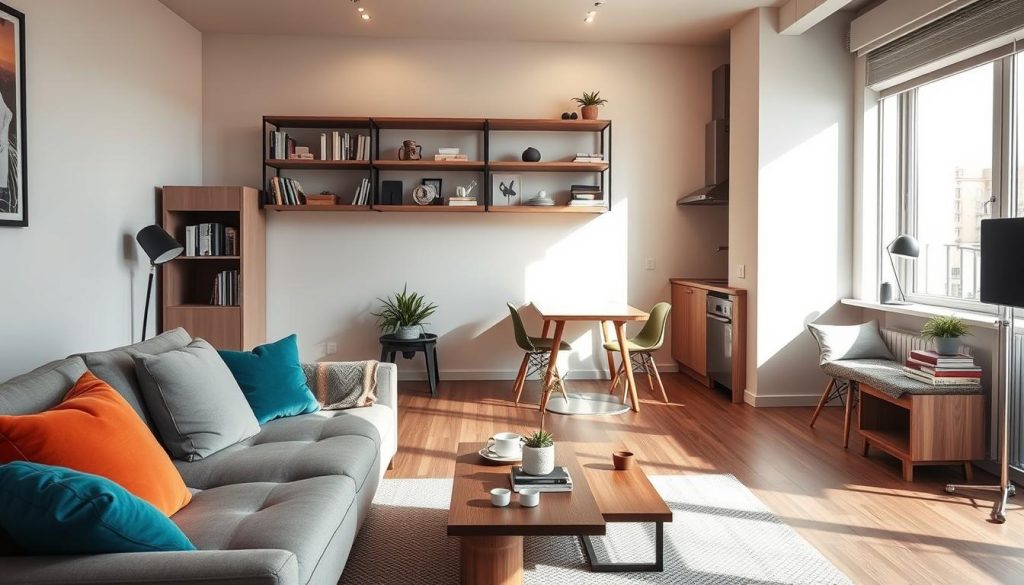
Vertical storage is a game-changer for small apartments. Wall-mounted shelves, tall cabinets, and floor-to-ceiling bookshelves save floor space. They also make rooms look taller, making them feel bigger.
Using these methods keeps your space neat and stylish. It’s all about making the most of every inch.
| Furniture Type | Multi-Functional Feature | Benefits |
|---|---|---|
| Sofa Bed | Transforms from a sofa to a bed | Provides seating and sleeping options |
| Storage Ottoman | Offers storage space inside | Dual use for seating and storage |
| Expandable Dining Table | Adjustable size for gatherings | Maximizes space for everyday use |
| Wall-Mounted Shelves | Utilizes wall space for storage | Keeps the floor clear and organized |
Color and Lighting Choices that Impact Small Spaces
Decorating small spaces involves choosing the right colors and lighting. The right colors can make a room look bigger. Good lighting adds to the room’s feel. Knowing how to use these elements can make your space welcoming and beautiful.
The Effect of Color Palettes on Perception of Space
Light colors make a room feel bigger and brighter. Soft pastels or neutral tones help create an open feel. Darker shades can add coziness and depth.
It’s important to balance these colors. This keeps your space both spacious and cozy. Adding accent walls or colorful furniture can add personality without making the room feel too busy.
Layering Lighting for Depth and Atmosphere
Lighting greatly affects the feel of a small room. Using different types of lighting—ambient, task, and accent—makes a space warm and inviting. Ceiling lights provide overall brightness, while table lamps are for specific tasks. Accent lights highlight special features.
Choosing the right lighting fixtures is key. They should fit well with your space’s size. This makes your space look better and feel more welcoming.
Conclusion
Understanding small space design is key to a welcoming and useful living area. Recognizing the importance of scale and making smart furniture choices helps avoid common mistakes. Every decision, from avoiding oversized furniture to picking multi-purpose pieces, shapes your space.
Using smart strategies like making the most of vertical space and layering lighting can boost your small apartment’s look. These decorating tips not only make your space more functional but also improve its feel. You can turn a small place into a stylish, cozy home that reflects your taste.
When planning your small space design, remember that every detail is important. Choosing the right colors and layouts can make a big difference. By following these tips, you’re on your way to creating a home that’s both beautiful and enjoyable to live in.
FAQ
What are some common mistakes in small space decorating?
Common mistakes include using too big furniture and picking furniture that’s too small. Not editing belongings can also cause clutter. To avoid these, choose furniture that fits well and declutter regularly.
How does furniture size impact small spaces?
Furniture size is key in small rooms. Big pieces can overwhelm, while small ones can make the room feel off-balance. Make sure to measure your furniture to fit your space well.
What is the recommended spacing for pathways in small rooms?
Leave at least 18 inches between tables and chairs, and three feet for walkways. This improves movement and makes the room feel bigger and more comfortable.
How can I maximize functionality in my small living area?
Use multi-functional furniture like storage ottomans, fold-out beds, or coffee tables with hidden spots. This way, you use your space well without losing style.
What role does color play in small space design?
Color greatly affects a small room’s feel. Light colors make spaces feel bigger, while dark colors add coziness. It’s about finding the right mix for your taste.
Why is lighting important in small spaces?
Good lighting makes a room look better and work better. Use different lights—ambient, task, and accent—to create a welcoming feel and add depth.
What are some tips for utilizing vertical space?
Use wall-mounted shelves, tall cabinets, and floor-to-ceiling bookshelves to make the most of vertical space. These options help save floor space and draw the eye up.
