

Creating a great rental-friendly home office is more than just picking the right desk and chair. It also means improving acoustics to help you work better. With more people working from home, good home office acoustics are key. Many rental places don’t have sound control, causing distractions that can mess up your work.
By knowing the common sound problems and taking steps to fix them, you can make your work space quieter and more efficient. This will help you focus better and work more productively.
The Importance of Acoustics in Your Rental Home Office
In a rental home office, acoustics are key to a good work space. They help you stay focused and productive. Different noises can distract you, making it hard to work well and causing stress.
To create a great workspace, you need to control these distractions. This way, you can work clearly and efficiently.
Why Sound Matters for Productivity
Good sound quality is vital for your work. External noises like traffic or pets can pull you away from your tasks. This can lead to frustration and mistakes in meetings.
A well-designed space helps you stay on track. Sound control measures make your work area better. They also help you feel less stressed, so you can do your job better.
Common Noise Sources Disrupting Your Work Environment
Knowing what noises disturb your office is important. Here are some common ones:
- Nearby traffic sounds
- Television noise
- Conversations from other rooms
- Appliances, such as refrigerators or washing machines
- Sounds from pets
By knowing these distractions, you can fix them. This makes your work space calm and productive.
https://www.youtube.com/watch?v=iXzQ25FXexE
Identifying & Sealing Noise Leaks
To make your rental home office quiet, start by finding and fixing noise leaks. A detailed sound leak audit is key to find where sound can sneak in. Look for gaps around doors, windows, and even electrical outlets. Once you know where the leaks are, you can use soundproofing solutions to make your space quieter.
Conducting a Sound Leak Audit
Start your audit with a decibel meter app to check your workspace’s noise levels. Test these levels in different spots, noting where the noise bothers you most. Focus on common spots where noise can sneak in. Check:
- Window frames
- Door edges
- Electrical outlets
- Baseboards
Once you find the worst spots, you can decide which ones need fixing first.
Effective Solutions to Seal Doors and Windows
There are many ways to block noise leaks and make your space quieter. Here are some good options:
- High-density foam weatherstripping: This is easy to put on windows and doors to stop sound.
- Automatic door sweeps: These at the door’s base can cut down sound.
- Acoustic caulk: Great for sealing gaps around windows and outlets. It stays flexible and seals well.
Using these methods can really cut down on noise. You might see a 5-12 decibel drop, making your office much quieter.
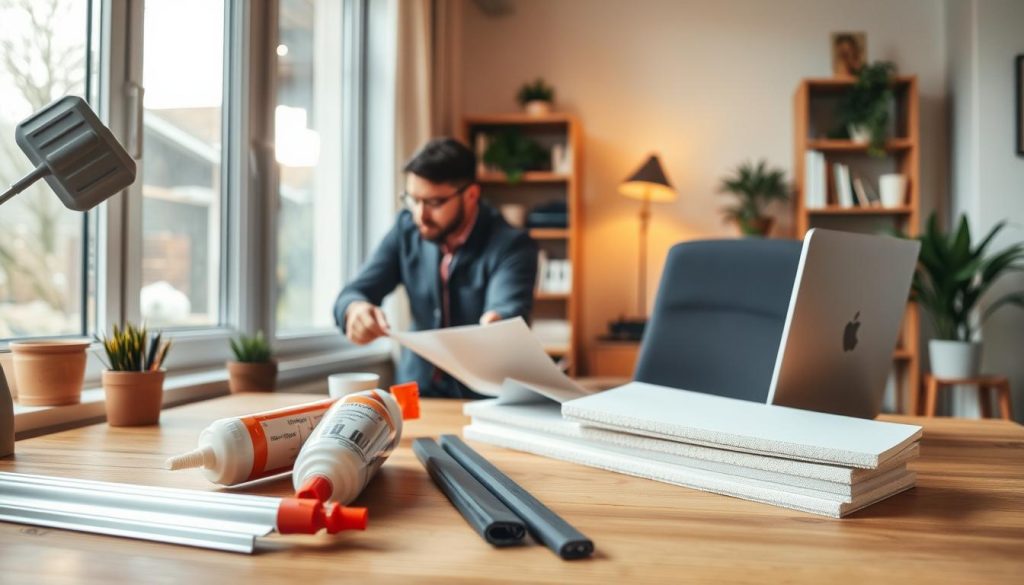
Enhancing Your Rental-Friendly Home Office with Sound Absorption
To make your rental home office peaceful, you need to focus on sound absorption. This includes picking the right acoustic panels and arranging your furniture. These steps help keep your work area productive.
Choosing the Right Acoustic Panels
Choosing the right acoustic panels is key for good sound absorption. Panels that are 2 to 4 inches thick work best. They absorb more sound than thinner foam panels, which only handle high frequencies.
When picking panels, look for ones with a sound absorption coefficient that fits your needs. Brands like Auralex and Soundproof Cow have many options. They help you find panels that look good in your home office.
Furniture Arrangement as a Sound Controlling Tool
How you arrange your furniture affects sound in your office. Using shelves and upholstered furniture as barriers helps. They break up sound waves, making your conversations clearer.
Adding heavy items like books or decorative pieces helps absorb sound. Try floating your desk away from walls. Place big items like couches or cabinets in a way that controls sound best.
Implementing Renter-Friendly Solutions
Turning your rental home office into a quiet workspace is possible. Look for renter-friendly solutions that meet your needs. It’s important to find ways to improve sound quality without making permanent changes.
Focus on temporary and non-invasive soundproofing methods. These can greatly improve your work environment.
Temporary Soundproofing Products
Think about using temporary soundproofing products to boost your office’s sound quality. These items are easy to set up and take down, making them ideal for renters. Some great options include:
- Heavy acoustic curtains that absorb sound and look good.
- Thick rugs with quality underlays to help dampen sound.
- Movable acoustic panels for flexible placement based on your layout.
These products help reduce noise, creating a better work atmosphere.
Maximizing Sound Absorption with Non-Invasive Techniques
Using non-invasive soundproofing techniques can greatly improve sound absorption in your home office. Try these methods:
- Arrange furniture to block noise, using bookshelves and sofas as barriers.
- Add soft furnishings like cushions or bean bags to absorb sound waves.
- Use wall treatments like fabric wall hangings for both looks and soundproofing.
These renter-friendly solutions are affordable and won’t break your rental agreement.
Conclusion
Improving acoustics in your rental home office is key for focus and productivity. By following the steps in this article, you can make a quieter space. This will enhance your work experience.
Sealing noise leaks and using sound absorption are good ways to start. These strategies can change your workspace for the better.
By controlling sound, you’ll work better and focus more. Using acoustic panels or smart furniture placement helps a lot. Each step makes your office quieter and more effective.
With better acoustics, your work area will be more productive. This will help you do your tasks better and be more creative. Start improving your workspace today and see how it changes your work life.
FAQ
How can I tell if my rental home office has noise leaks?
Look for air gaps around doors, windows, and outlets. Use a decibel meter app to measure noise before and after improvements.
What are some effective methods to reduce noise in my home office?
Seal gaps with foam weatherstripping and install automatic door sweeps. Apply acoustic caulk to windows. These steps can cut noise by 5-12 decibels.
What types of acoustic panels should I choose for my rental home office?
Choose thick acoustic panels (2-4 inches) for better sound absorption. They handle more sound frequencies than thin foam panels. Pick based on your sound issues.
Are there renter-friendly solutions to soundproof my home office?
Yes! Use heavy acoustic curtains, thick rugs, and movable panels. These are easy to set up and won’t harm your rental.
How can I arrange my furniture to enhance my office acoustics?
Arrange furniture to absorb sound. Use shelves, upholstered furniture, and heavy items to break up sound waves and reduce echoes.
How can noise pollution affect my work performance?
Noise pollution can drain your energy and cause stress. It can make you less focused and lead to miscommunication in virtual meetings. Good sound control is key for a productive space.
Can acoustic improvements make a difference in virtual meetings?
Absolutely! Good sound control keeps virtual meetings clear. It reduces miscommunication and makes meetings more professional and focused.
