

Choosing the right colors is key when decorating small spaces like studio apartments. The right colors can make your space feel bigger and more welcoming. This guide will show you how to pick colors that work well with light and space.
By following expert advice and exploring different styles, you’ll learn how to make your living area more vibrant. You’ll be able to make choices that make your space feel more open and inviting.
Understanding the Impact of Color in Small Spaces
In small spaces, color is key. Your choices can change how a room looks and feels. Color psychology shows that colors can make us feel different emotions.
When picking colors for tight spots, knowing how colors look is important. The way colors appear can change with light. So, think about both natural and artificial light.
The Psychology of Color and Space
Colors can make a small space feel bigger. Light colors make areas feel open and airy. Dark colors can make a room feel cozy but can also feel too much.
Neutral colors can bring calm, while bright colors can add energy. Using these effects can make a small space feel welcoming and roomy.
How Light Affects Color Perception
Light and color work together in small spaces. Natural light makes light colors pop. Artificial light can change how colors look.
For example, warm light can make colors seem softer. Daylight can show their true color. Knowing this can help you pick the right colors for your space.
| Color | Psychological Effect | Best Lighting Conditions |
|---|---|---|
| Light Blue | Calming and serene | Natural light enhances its tranquility |
| Soft Yellow | Cheerful and warm | Fluorescent or warm artificial light |
| Cool Gray | Modern and sleek | Natural light for a refreshing look |
| Pastel Green | Refreshing and soothing | Bright natural light |
Choosing Light and Bright Colors for Small Apartments
In small apartments, picking the right colors is key. Light colors and bright hues make rooms feel bigger and more open. They create an airy feel, making your space look larger and more welcoming.
Benefits of Using Light Colors
Light colors make your small apartment feel more inviting. They reflect light, making your space brighter and reducing the need for extra lights. This airiness makes small areas seem bigger and more relaxing.
Top Light Color Recommendations
Experts suggest several light colors that are great for small apartments. Some top picks include:
- Benjamin Moore’s White Dove
- Chantilly Lace
- Coral Dust
These colors brighten your home and give it a fresh, modern look. Using these colors in your small apartment boosts both beauty and function. It makes your space lively and inviting.
Exploring Bold and Dark Colors in Small Spaces & Studio Apartments
Bold hues and dark colors can make your studio apartment lively. They challenge the idea that only light shades work in small spaces. These deeper shades add sophistication and depth, making your space welcoming.
Choosing the right undertones and mixing these colors with light can create a beautiful space. It’s all about finding the right balance.
How Dark Colors Can Create Depth
Dark colors add layers and depth to your room. They also bring comfort and intimacy. When used wisely, dark colors can make your studio feel bigger.
They draw your eye across the room, making it feel more inviting. Try pairing dark walls with light furniture or metallic accents for the perfect balance.
Recommendations for Rich, Dark Hues
When picking bold colors, choose rich, dark shades that match your style. Here are some great options:
- Benjamin Moore’s Down Pipe: A sophisticated, cool dark gray that pairs well with a variety of colors.
- Tricorn Black: This deep black creates a dramatic backdrop, perfect for bright accents.
- Wenge: A luxurious dark brown that adds warmth and grounding.
- Bittersweet Chocolate: A rich, elegant option that adds class to any room.
Adding these dark colors to your studio apartment shows off your unique style. It makes your space cozy and welcoming.
Color Pairing: Finding the Right Combinations
Creating a cozy atmosphere in small apartments needs careful color choices. A mix of colors keeps things interesting and adds character. This makes your home feel welcoming and beautiful.
Importance of Color Variation
Color variation adds depth and interest to small spaces. A smart color scheme can turn a dull room into a lively one. By mixing different shades, you highlight features and create eye-catching points.
This approach also makes your space feel bigger and more lively. It’s all about creating a pleasant atmosphere.
Effective Color Pairing Strategies
To get great color combinations, try these tips:
- Complementary hues: Pair colors opposite each other on the color wheel for a vibrant contrast.
- Contrasting textures: Introduce various materials, such as smooth and rough, to create visual interest.
- Variations within a color family: Use multiple shades from the same color family, ranging from light to dark, for a cohesive yet dynamic look.
- 10/30/60 ratio: Implement this guideline by dedicating 60% of your space to main colors, 30% to accents, and 10% to highlights or metallics, ensuring a balanced design.
Trying out these ideas lets you create a beautiful atmosphere. It showcases your small apartment’s charm and makes it feel bigger.
| Color Combination | Effect | Suggested Use |
|---|---|---|
| Light Blue and White | Calming and spacious | Living room |
| Grey and Yellow | Modern and vibrant | Kitchen |
| Deep Green and Cream | Natural and cozy | Bedroom |
| Rust and Teal | Warm and inviting | Dining area |
| Black and Rose Gold | Chic and elegant | Entryway |
Transforming Small Spaces with Accent Colors
Accent colors make small spaces lively and stylish. They make rooms feel welcoming and unique. Using accent walls creates different areas in your apartment, adding flair to each room.
Using Accent Walls to Elevate Your Space
Accent walls are focal points that catch the eye and add depth. A bold color or patterned wallpaper can turn a simple area into a standout feature. In small spaces, these walls help divide areas, keeping the room open and airy.
Incorporating Accessories and Furnishings
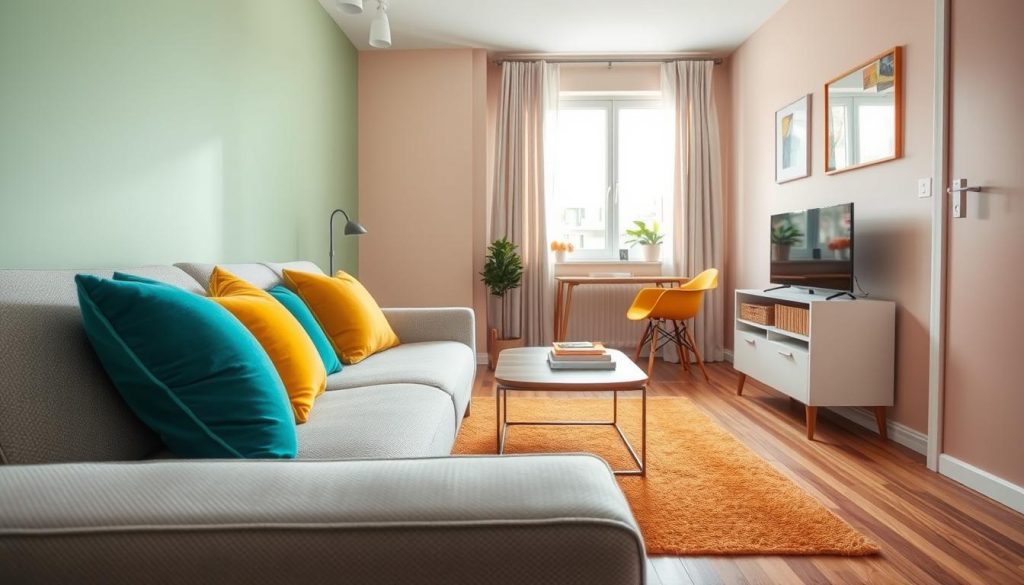
Accessories and furnishings are key in adding color to your space. Choose cushions, artwork, or rugs in accent colors. These items bring color without the commitment of paint, making it easy to update your style.
By mixing these colors in your decor, you achieve a unified look. This ties the room together beautifully.
Understanding the Importance of Architectural Features
Features like trims, moldings, and built-ins can be highlighted with matching colors. These elements add character and focus attention on certain parts of your apartment. Using accent colors here boosts the room’s overall look, making it feel more thoughtful and designed.
Conclusion
Choosing the right colors for small apartments is key to creating a cozy and useful living area. Knowing how colors affect us and how light changes their look helps you pick the best colors. Light colors can make small spaces feel bigger, while bold colors add character.
Using accent colors on walls, furniture, and accessories can make your small spaces feel more like home. Mixing light and dark colors creates a balance that makes small areas look bigger and more inviting. By using these tips, you can turn your home into a stylish sanctuary that shows off your personality and makes the most of every inch.
FAQ
What are the best colors for small apartments?
For small apartments, choose light and bright colors. Benjamin Moore’s White Dove and Chantilly Lace are great. They make rooms feel bigger and more open.
Can dark colors be used in small spaces?
Yes! Dark colors can add depth and style to small spaces. Benjamin Moore’s Down Pipe and Tricorn Black can make rooms cozy and intimate.
What is the 10/30/60 rule in color selection?
The 10/30/60 rule is simple. Use 60% of your space for main colors, 30% for accents, and 10% for highlights. This creates a balanced and appealing look.
How can accent colors enhance my small apartment?
Accent colors add personality without overwhelming your space. Use them on walls or in decor like cushions and art. They bring color and life to your home.
What are some tips for pairing colors effectively?
Pair colors by using complementary hues and contrasting textures. Also, mix light and dark shades within the same color family. This keeps your space interesting and dynamic.
How does light affect the colors I choose for my apartment?
Natural light changes how we see colors. Lighter colors make spaces feel larger. Darker shades can make rooms seem bigger when used wisely.
How can I use architectural features to enhance my color scheme?
Use architectural features like trims and moldings to add color. They help create a cohesive look and highlight stylish parts of your apartment, improving the overall design.
